Argentine Tango Classes and Social Dancing —
Frequently Asked Questions
A few things you need to know about learning Argentine tango, attending milongas, tango etiquette, music, and what to expect as a beginner or returning dancer.
Getting Started with Argentine Tango
No partner is needed to join a tango class. Most students arrive on their own, and classes are structured so that partners rotate regularly throughout the session. Rotating partners helps you develop adaptability, connection, and confidence with a variety of people. You are welcome to bring a partner if you have one. We will let you know if it’s required on occasion.
Yes. Argentine tango is one of the most accessible partner dances for complete beginners because it is based on natural walking and balance rather than memorized steps or athletic ability. No prior dance experience is needed. Beginners are welcomed and supported from the very first class.
No. Tango is popular with all ages, and in its’ birthplace, Buenos Aires, tango is experiencing an incredible renaissance amongst a crowd of younger dancers.
No. Argentine tango is danced and enjoyed by all ages. It is a low impact dance that places no unusual demands on the body, and many people begin learning in their forties, fifties, sixties, and beyond. Tango is widely known to improve posture, balance, coordination, and mental sharpness, and the social dimension makes it especially rewarding for older adults.
No. Argentine tango and ballroom tango are distinct dances with different music, movement, embrace, and culture. Argentine tango is an improvised social dance built on connection and musical sensitivity between two partners. Ballroom tango follows fixed choreography and is designed for competition and performance. We teach Argentine tango exclusively.
Argentine tango has two roles — proposer and interpreter. You choose the role that suits you, and many dancers eventually learn both. Learning both roles gives you a much deeper understanding of the dance and makes you a more attentive and responsive partner. All genders are welcome in both roles.
Yes, and this is one of the most common reasons people are drawn to tango. Whether you are new to a city, looking to expand your social circle, or simply want a meaningful activity that connects you with others, tango consistently delivers.
Your first tango class will focus on the basics — connection with your partner, musicality, posture, walking, balance, and the embrace. You do not need any prior experience, a partner, or special shoes. The atmosphere is welcoming and unhurried. Arriving a few minutes early gives you time to settle in, meet your teacher, and feel comfortable before the class begins. Everyone in the room was a beginner at some point.
Tango Classes, Workshops, and Private Lessons
We offer classes for beginners, intermediate dancers, and more experienced social dancers. We also offer coaching for advanced dancers and those interested in participating in the Buenos Aires Tango World Cup. All classes teach social tango — you learn transferable principles and skills rather than fixed routines.
You can begin dancing socially and enjoying tango after learning the basics, which most people achieve within a few months of regular classes. Deeper skill — musicality, refinement, and sensitivity — develops gradually over years. Tango is considered a lifelong practice, and this is part of what makes it so rewarding. There is always something new to discover.
The most effective combination is regular classes, consistent social dancing, and deliberate practice of fundamentals. Listening to tango music outside of class, even during daily activities, builds musicality more quickly than most people expect. There are many tango exercises you can practise on your own without a partner. Dancing with a wide variety of partners accelerates growth significantly. Private lessons can also fast track progress if you have specific goals or want detailed feedback.
Private lessons are highly effective for dancers who want focused, personalized instruction. They complement group classes and allow your teacher to address exactly what you need at that moment. Private lessons are not required, but many dancers find them transformative at key stages of their development.
Some classes are available on a drop-in basis while others require advance registration. Payment options vary by class and are available online or in person. For current class times, pricing, and booking details, check our schedule page or get in touch directly.
What to Wear to Tango
Since tango involves close contact with partners, the first thing to be aware of before attending a tango class is personal hygiene. Be sure you be recently showered, teeth brushed, clean clothes. Wear comfortable clothing that allows you to move freely. There is no dress code for classes. Avoid anything so restrictive it limits your movement or so loose it interferes with your partner.
No. You do not need tango shoes to begin learning. What matters is that your shoes feel secure, allow you to pivot smoothly, and have a sole that does not grip the floor excessively. Smooth leather or suede soles work well, as do certain dance sneakers. Avoid thick rubber soles. Many beginners start in regular flats or low heels and invest in tango shoes once they decide to commit to the dance.
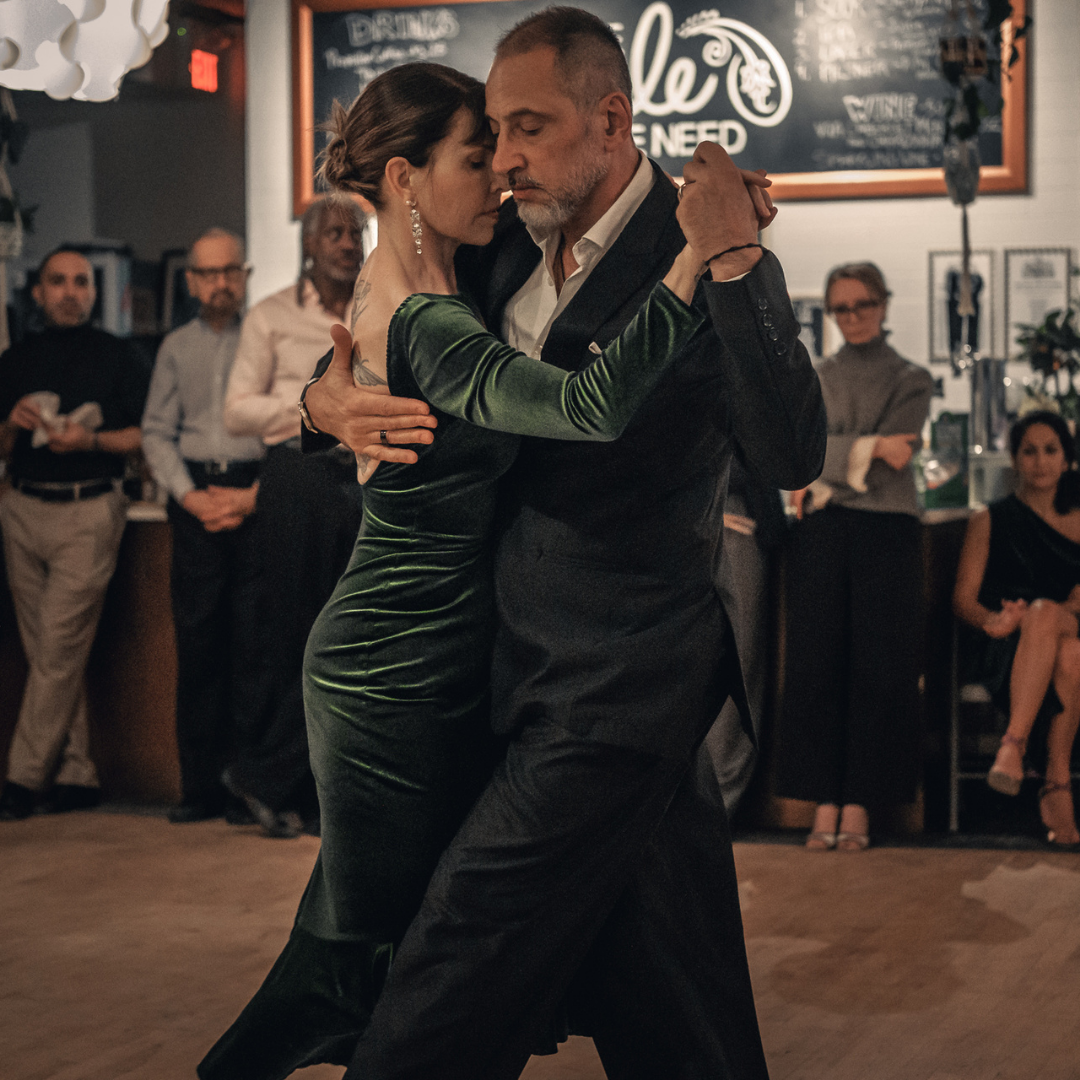
The close embrace is the very essence of authentic tango and is often the element of the dance that people fall most in love with . Many people feel easily comfortable to embrace a dance partner. For others, it is normal to feel uncertain about close embrace at first, and you are not alone in that feeling. The embrace in Argentine tango is meant to be comfortable and respectful — a shared point of connection rather than something imposed. You ease into it gradually and with partners you feel comfortable with. Most dancers find that any initial awkwardness dissolves quickly.
Still Have Questions?
If something is not covered here, please get in touch.